
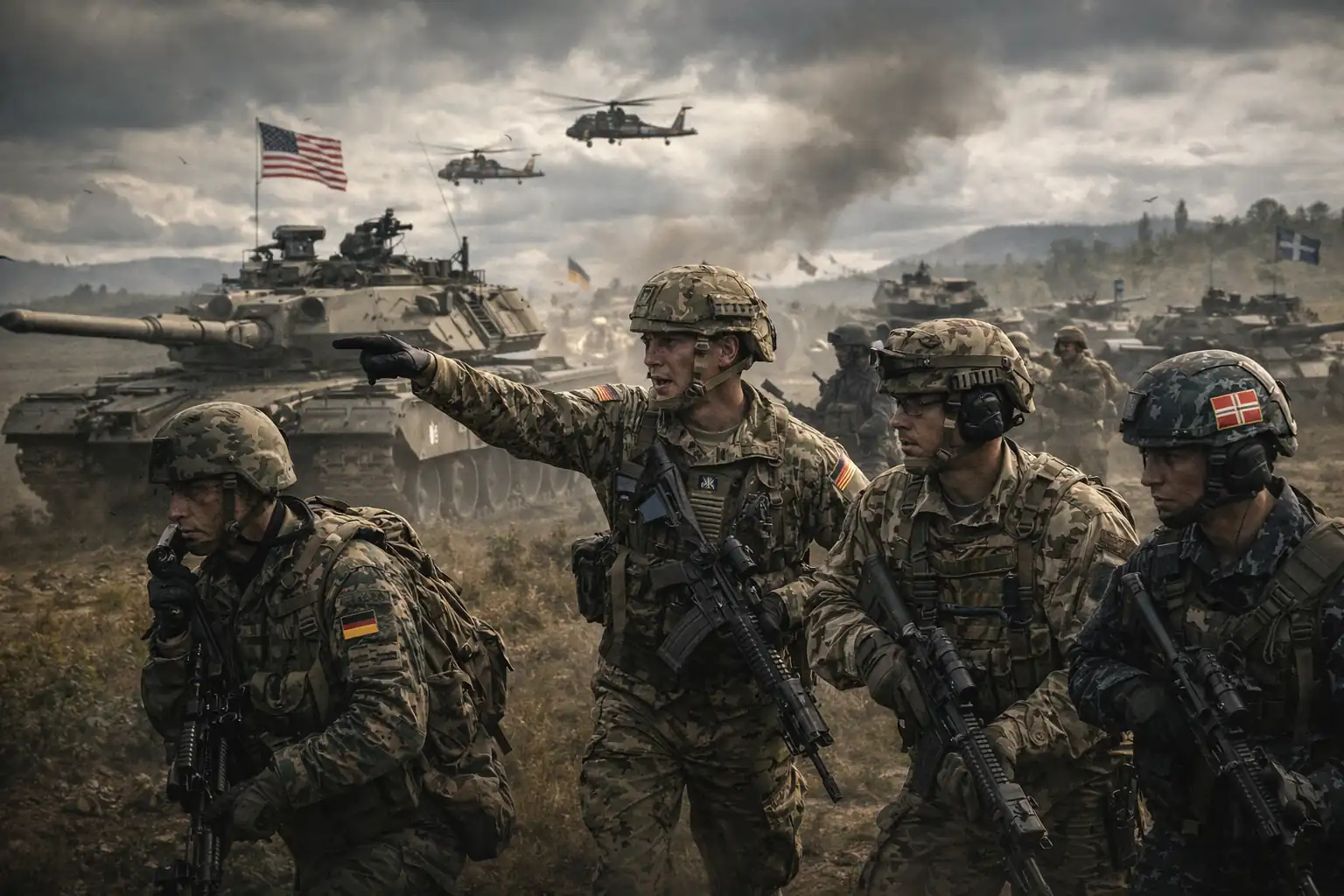
The Strait of Hormuz has become the latest flashpoint in an already strained relationship between the United States and its NATO partners. As Iran effectively closed the vital waterway following the American-Israeli military assault launched in late February 2026, President Donald Trump turned to his Western allies and demanded they step up militarily only to be met with resistance, reluctance, and in some cases outright refusal.
The Stakes: A Global Chokepoint Under Pressure
The Strait of Hormuz is the narrow passage between the Persian Gulf and the Gulf of Oman through which roughly 20 percent of the world’s oil trade typically passes. Its disruption has sent shockwaves through global energy markets. With the Iran war entering its third week, the price of oil reached nearly $105 a barrel, and the economic consequences have been swift and severe. Brent crude climbed sharply as Iran stepped up its attacks on energy infrastructure across the Gulf, having risen more than 40 percent since the war began.
The closure has not been symbolic. According to marine traffic data, only 15 vessels transited the strait over a three-day period, with around 87 percent being outbound transits and many vessels taking unusual routes through Iranian territorial waters. The passage, once among the busiest in the world, had been reduced to a trickle.
Trump’s Demand and the Warning to NATO
Against this backdrop, President Trump moved aggressively to pressure allies into action. On Saturday, Trump called on China, France, Japan, South Korea, the United Kingdom, and others to send warships to the Strait of Hormuz. He framed the request not merely as a matter of American interest but as a shared obligation. Trump told the Financial Times that it was appropriate for countries who benefit from the strait to help ensure safe passage, and warned that a failure or negative response would be “very bad for the future of NATO.”
The threat was direct and personal. Trump said aboard Air Force One that whether or not he received support, “we will remember.” That warning soon escalated into something sharper. Trump posted on his Truth Social platform calling NATO countries “COWARDS,” adding that the United States would “REMEMBER” their refusal.
NATO Allies Push Back
The response from across the Atlantic was largely one of pushback and caution. Most NATO members made clear they had no intention of sending warships into what they viewed as a conflict they had no hand in starting.
German Defense Minister Boris Pistorius dismissed the request pointedly, questioning what a handful of European frigates could accomplish in the Strait of Hormuz that the powerful U.S. Navy could not. A German government spokesman went further, noting that the United States and Israel had not consulted European allies before the war began and had explicitly stated at the outset that European assistance was neither necessary nor desired.
The EU’s foreign policy chief Kaja Kallas responded coolly, stating that the strait falls “out of NATO’s area of action,” and that EU foreign ministers meeting in Brussels found no appetite for expanding their existing naval operations in the region.
British Prime Minister Keir Starmer said his government was working with allies to reopen the strait, but made clear it would not be a NATO mission and that the UK would not be drawn into the wider war. The UK ruled out sending warships into the strait or nearby Iranian waters, though it permitted the United States to use two of its military bases Diego Garcia and RAF Fairford — for specific and limited defensive actions.
Spain was among the most direct in its refusal, with Defense Minister Margarita Robles stating that Spain would never accept stopgap measures to keep the strait open, arguing that the objective must be for the war to end.
Key Developments at a Glance
- NATO was designed as a defensive alliance, and several member states argued that it was never intended to compel allies to follow one member into a war of choice, a point that former Estonian President Toomas Hendrik Ilves articulated when he noted it was “a bit rich” for Trump to call for solidarity after months of threatening and insulting allies.
- The tensions over Hormuz collided with existing fault lines in the alliance, including Trump’s push to acquire Greenland from NATO ally Denmark, which had already exposed deep divisions and prompted European leaders to warn that unity was being undermined at a time of rising global threats.
- Officials also noted that sustained disruption in the Strait of Hormuz could hand a strategic advantage to Russia, as any prolonged spike in global oil prices driven by threats to shipping through the waterway would boost Moscow’s energy revenues as it continues its war in Ukraine.
The Alliance at a Crossroads
The episode exposed a fundamental tension at the heart of the transatlantic relationship. Trump had spent considerable energy berating NATO allies for low defense spending and expressing skepticism about the alliance’s value, only to turn around and demand military solidarity in a conflict that those same allies were never consulted about. Many European governments had absorbed considerable punishment from Washington in the form of tariffs, territorial threats, and public criticism all to preserve U.S. support for Ukraine and were now being asked to join a war they had actively tried to prevent.
In a dramatic turn, Trump eventually reversed course entirely, declaring that the United States had decimated Iran’s military and no longer needed or desired NATO assistance, adding that the United States “never did” need help and was “by far the Most Powerful Country Anywhere in the World.”
Whether that shift represented a genuine change in strategy or a face-saving response to allied refusals, the diplomatic damage was already apparent. The argument over the Strait of Hormuz had become one of the most visible tests of NATO cohesion in years and the alliance had not passed it cleanly. The question now is whether the fractures opened by this episode can be repaired, or whether they represent a lasting shift in how the world’s most consequential military alliance functions in an era of unilateral American military action.